
Nightly commercial cleaning can be solid, and you can still hear “The restroom is a mess” at 2:00 p.m. That doesn’t always mean your night crew is failing. It usually means the building is being used. People move through the lobby, touch the doors, fill the trash, and hit the restrooms hard in waves.
That gap between the nightly reset and the daytime reality is exactly what day porter service is built to cover.
This article answers one practical question: if your office building already has nightly commercial cleaning, when does day porter service actually make sense? You’ll also see what to spell out in your scope of work so expectations stay clear.
What nightly commercial cleaning does well
Think of nightly cleaning as your building’s reset — it sets the baseline for the next day.
In most office buildings, after-hours cleaning covers:
- Restrooms cleaned and restocked for the morning
- Trash removed and relined
- Breakroom surfaces wiped down
- Vacuuming and routine floor care
- High-touch disinfection on agreed touchpoints
- Common areas straightened so they open looking ready
When nightly cleaning is consistent, your building starts the day in good shape. That matters for tenant confidence.
The limitation is simple: nightly cleaning isn’t there while people are using the space.
Why “we clean every night” can still feel messy by 2 p.m.
This is the part that frustrates property managers. You’re paying for recurring service. You’re still getting complaints. Nobody’s lying — the building is just busier than the cleaning schedule.
Nightly commercial cleaning can’t:
- Respond to a spill in real time
- Fix the lobby after a midday tour
- Restock restrooms after a rush
- Keep trash from overflowing during peak hours
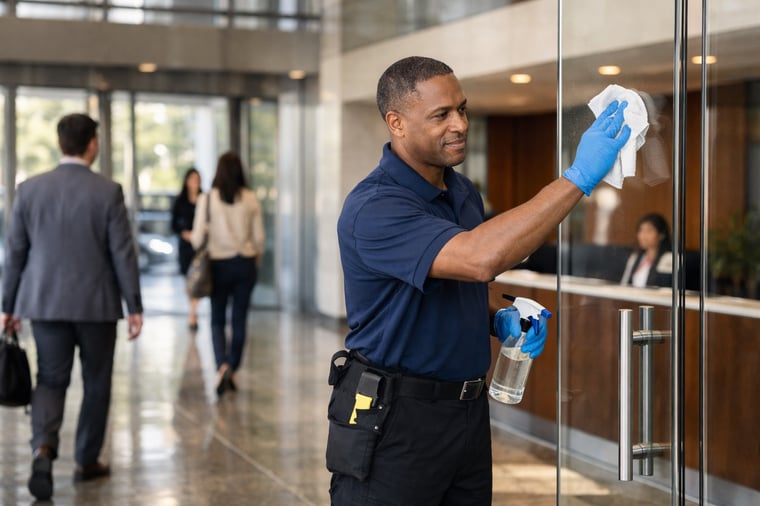
- Wipe fresh fingerprints off entry glass and door hardware
If the problem is happening during business hours, the answer isn’t always “add more at night.” Sometimes you need coverage during the day. That’s what a day porter does.
What day porter service means in an office building
Day porter service is recurring daytime support focused on keeping the building presentable while people are actively using it.
A good porter isn’t redoing the night crew’s work — they’re protecting the experience during the hours that matter most.
Here’s a clean way to frame it for stakeholders:
- Nightly cleaning restores the building.
- Day porter service maintains it.
That’s the difference that stops the “It was clean this morning, but now it’s not” complaints.
Signs you need day porter service
Not every office building needs a porter every day. But there are clear signals when it becomes worth it.
Complaints show up midday, not first thing in the morning
If your emails start after lunch, you’re dealing with a usage pattern issue, not a nightly quality issue. A porter can handle touch-ups before small problems become visible ones.
The building has visitors, tours, or shared common areas
Multi-tenant buildings are unpredictable. Visitors don’t care that cleaning happened at night — they only see what the lobby looks like right now. Porter coverage helps most in lobbies, elevators, high-traffic corridors, shared restrooms, and breakrooms.
Restrooms are a constant pressure point
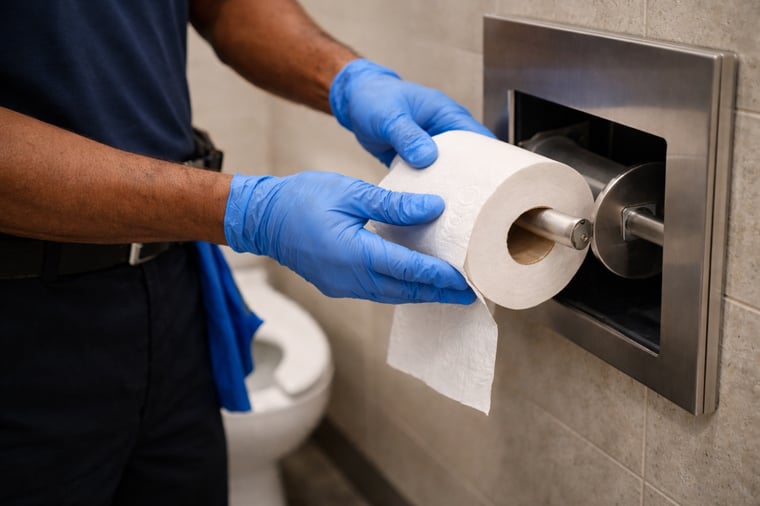
Restrooms are the fastest way to lose tenant trust. Supplies run out, odors develop, and tenants assume the whole program is slipping. A day porter can run scheduled checks, handle spot cleaning, and keep restocking consistent.
“Daily cleaning” has become a confusing phrase
This comes up all the time. Someone asks for daily cleaning and everyone pictures something different. Day porter service works best when you define what zones are covered, what tasks are owned, how often areas are checked, and how issues get communicated. Clarity protects both sides.
What day porter service should cover during business hours
Porter work should stay focused on high-visibility, high-impact areas. The goal is fewer complaints — not a long task list that looks impressive on paper.
In an office building, day porter service typically includes:
- Restroom checks, spot cleaning, and supply top-offs
- Quick wipe-downs of touchpoints like handles, rails, and elevator buttons
- Breakroom resets after peak usage
- Trash patrol in lobbies and shared spaces
- Fast response to spills and debris tracked in near entrances
This is also why your janitorial checklist matters. If it only covers nightly tasks, you’ll always feel the daytime gap.
When nightly cleaning is enough — and when it’s not
Two questions cut through most of the confusion:
- When does the mess happen?
- Where do people notice it most?
Nightly cleaning is usually enough when:
- Occupancy is consistent and predictable
- Public traffic is limited
- Restrooms aren’t under heavy strain
- Your main goal is to open clean and stay reasonably tidy
In that case, tighten the scope, confirm inspections, and make sure daily priorities are clearly defined inside the nightly plan.
Day porter service makes more sense when:
- Tenants and visitors use the building steadily throughout the day
- Restrooms have multiple rush periods
- Tours and leasing activity are frequent
- Complaints are about presentation, not project-level work
- Your team is tired of filling the gap between cleanings themselves
Porter coverage doesn’t have to be full-time. Many buildings do well with a targeted window — late morning through mid-afternoon — when traffic peaks.
 What to put in your scope of work so there’s no confusion
If you want fewer misunderstandings, tighten the language in your scope. Vague phrases like “as needed” create conflict.
Define what “presentable” means in the lobby
- Glass and entry touchpoints kept clean during business hours
- Floors free of obvious debris near the entrance
- Trash stays neat and doesn’t overflow
- Smudges on high-visibility surfaces get addressed the same day
Set restocking standards that are easy to verify. Instead of “restrooms restocked,” use clear expectations: supplies stay above a minimum level, checks happen at defined times during peak traffic, and exceptions get reported the same day.
Confirm inspections and communication. Ask how quality inspections are done and how issues get tracked. Confirm basics like a current COI for vendor compliance. That’s not red tape — it’s how recurring services stay consistent.
Make the building look clean all day, not just at 8 a.m.
If your office building already has nightly commercial cleaning, day porter service isn’t automatically necessary. But if things get messy during business hours — or complaints center on the lobby, restrooms, and high-traffic areas — it’s often the missing piece that keeps standards steady throughout the day.
If you want help figuring out the right coverage, book a facility walkthrough. We’ll put together a practical plan based on your traffic patterns, your tenant expectations, and a clear scope of work that makes day porter service work without overcomplicating the program.