

How to Create a Cleaning Schedule for Multi-Tenant Buildings That Actually Works
Multi-tenant buildings have a way of looking manageable on paper and proving difficult in practice. One tenant has staff arriving before 7:00 a.m. Another runs client visits through the afternoon. Shared restrooms see steady traffic all day. The lobby needs to hold up from open to close. And trash, mess, and wear accumulate at different rates depending on the floor, the tenant mix, and how the building actually gets used on any given day in Charlotte, North Carolina.
This is why a cleaning schedule for multi-tenant buildings isn’t really about frequency — it’s about fit. A well-planned cleaning schedule for multi-tenant buildings should reflect how the building operates, not just how many times a week someone shows up. In practice, a strong multi-tenant building cleaning schedule aligns cleaning efforts with real usage patterns, not assumptions.
Look at Where Problems Show Up First
The fastest way to build a better cleaning schedule for multi-tenant buildings is to stop guessing and start with the areas that generate complaints. In most multi-tenant buildings, those areas are predictable. Restrooms lose consistency before the workday ends. Breakrooms collect spills and overflow trash by early afternoon. Entry glass looks smudged by mid-morning. Elevator lobbies and corridors start feeling worn long before the evening crew arrives. A useful multi-tenant building cleaning schedule is built around those realities. The areas worth prioritizing first:
-
Lobby and front entry
-
Shared restrooms
-
Elevators and corridors
-
Breakrooms and shared kitchens
-
Trash collection points throughout common areas
-
High-touch surfaces
-
High-traffic floors
Get these right consistently and you've addressed most of what tenants will ever notice or complain about.
Daily Cleaning Holds the Building Steady
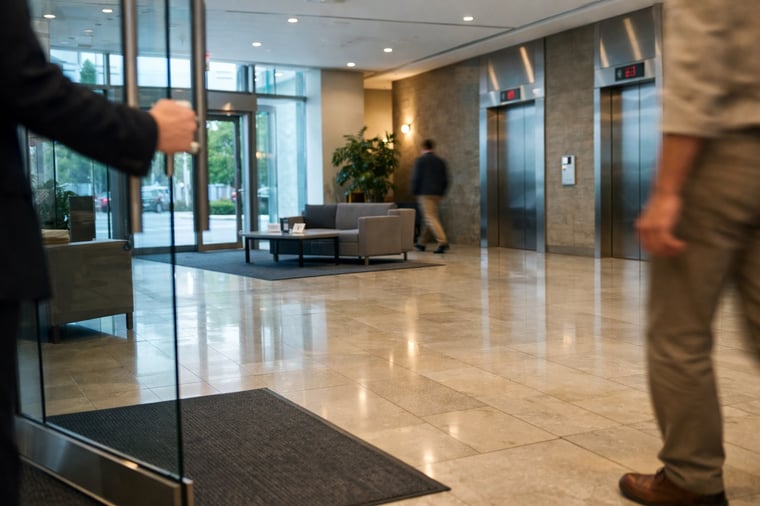
Daily service is the foundation of any cleaning schedule for multi-tenant buildings. It covers the tasks that keep the building functional and presentable between full cleanings — restroom care, trash removal, breakroom cleaning, vacuuming high-traffic areas, spot cleaning glass, and disinfecting the touchpoints people use constantly.
These aren't extras. They're what prevent the building from slipping into reactive mode, where small issues pile up until they become visible problems.
A well-designed multi-tenant building cleaning schedule should reflect how a normal weekday actually looks in Charlotte, North Carolina, not just what looks good on paper.
Nightly Cleaning Is for the Deeper Reset
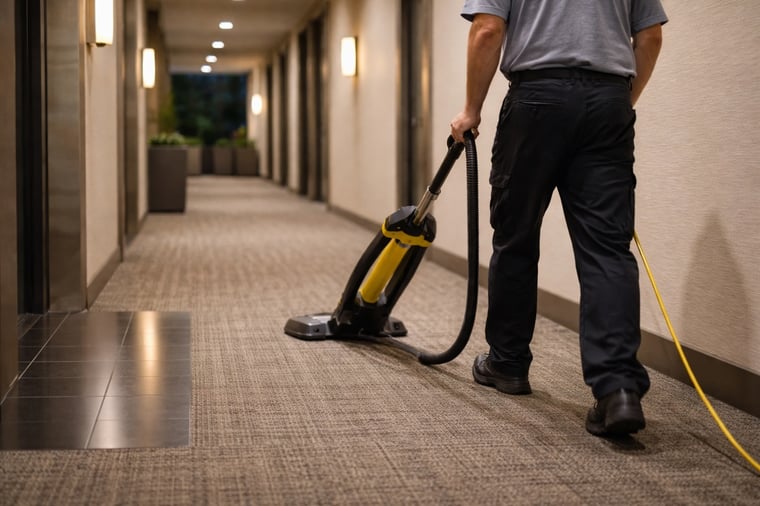
Nightly service is where the building gets restored for the next day. Less foot traffic, better access, fewer interruptions — it's the right window for work that needs more time and thoroughness. For most properties, a cleaning schedule for multi-tenant buildings should include nightly service for:
-
Full restroom cleaning
-
Breakroom and kitchen detailing
-
Vacuuming office areas
-
Hard floor mopping
-
Trash consolidation
-
Interior glass touch-ups
-
Conference room resets
-
Detailed attention in shared common areas
Daily service keeps things from slipping. Nightly service brings them back to standard. A properly structured multi-tenant building cleaning schedule separates these responsibilities clearly.
Day Porter Support - When the Building Drifts Before the End of the Day
Not every building needs a day porter. But many properties benefit when daytime coverage fills the gaps that a standard cleaning schedule for multi-tenant buildings can’t address alone. It's worth considering when:
-
Restrooms run low on supplies before the afternoon
-
The lobby and entry lose their polish by mid-morning
-
Trash builds up in common areas before evening service
-
Spills and small messes sit too long
-
Tenant complaints focus on daytime appearance
When your internal team is stepping in to handle these issues, your multi-tenant building cleaning schedule likely has a coverage gap.
A Straightforward Way to Build the Schedule
Property managers don’t need a complicated framework — they need a cleaning schedule for multi-tenant buildings that aligns with real-world use.
A simple approach:
Step 1: Identify the fastest-drifting areas
Step 2: Separate daily tasks from nightly reset work
Step 3: Determine if daytime porter support is needed
Step 4: Schedule weekly and monthly deep-clean tasks separately
This structure ensures your multi-tenant building cleaning schedule stays efficient, realistic, and scalable.
Build the Schedule Around How the Building Actually Works
For most properties in Charlotte, North Carolina, the right cleaning schedule for multi-tenant buildings is a combination of daily service, nightly resets, and optional daytime support where needed.
When these layers are clearly defined, the building becomes easier to manage. Complaints drop. Common areas stay consistent. And cleaning starts supporting operations instead of interrupting them.
If your current cleaning schedule for multi-tenant buildings feels reactive, it may be time to realign it with how your property actually operates.