
How Nightly Cleaning for Medical Offices Protects Patient Experience, Safety, and First Impressions
By the end of a full clinic day, your office has taken a beating. Patients in and out, staff touching the same surfaces hundreds of times, waiting room chairs that haven’t been wiped since morning. A quick tidy isn’t going to cut it — and your first patient tomorrow doesn’t care what the place looked like at 8:00 p.m. last night. They care what it looks like at 8:00 a.m. today.
That’s the bar nightly cleaning has to clear in a medical office. Not “looked at.” Actually clean, consistently, with a scope that accounts for how these spaces get used. Nightly Cleaning for Medical Offices isn’t just routine janitorial work — it’s a structured reset that ensures a safe, professional environment every single morning.
Here’s what that looks like in practice.
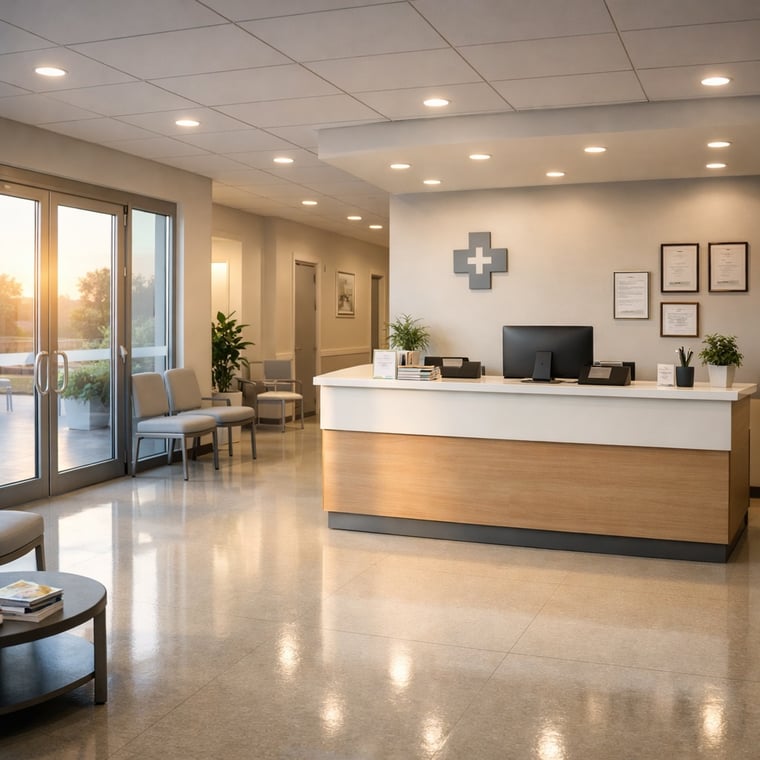
The front desk, lobby, and waiting room
First impressions in a medical office are made before anyone says a word. Patients are already forming opinions in the parking lot, and by the time they hit the waiting room they’ve got a read on the place.
Nightly scope here should cover:
- Entry doors, push plates, and handles wiped and detailed
- Check-in counter and visible surfaces cleaned
- Trash emptied and relined
- Floors vacuumed or mopped depending on surface type
- Interior glass spot-cleaned where smudges show
None of this is complicated. What makes it work is doing it the same way every night, so the morning opener isn’t playing catch-up before the first appointment walks in. This level of consistency is a core part of effective Nightly Cleaning for Medical Offices, where reliability matters just as much as thoroughness.
Exam rooms and clinical support areas
This is where medical office scopes get complicated, and where vague language causes real problems.
A commercial cleaning crew can handle general work in exam rooms:
- Emptying trash and replacing liners
- Wiping non-clinical surfaces your facility has approved
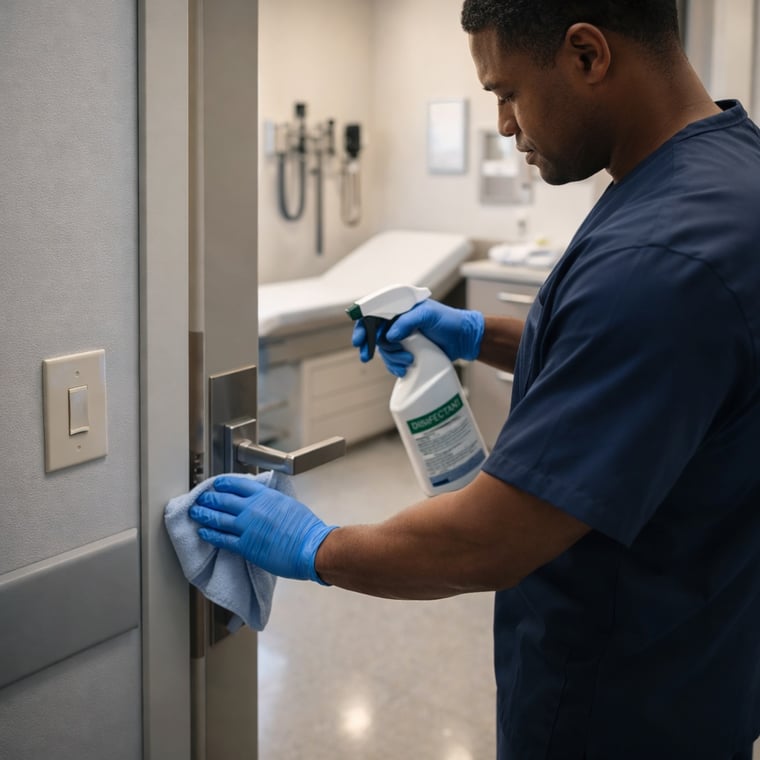
- Spot cleaning doors, light switches, and door frames
- Floor cleaning appropriate to the room, including edges
What they shouldn’t be doing is clinical disinfection or anything your practice manages through internal protocols. Most medical offices keep that work in-house for good reason. The scope needs to reflect that boundary clearly — not to limit the service, but so everyone knows exactly where the line is. Ambiguity in a medical setting isn’t just frustrating, it’s a liability.
Clear expectations are essential in Nightly Cleaning for Medical Offices, ensuring compliance, safety, and accountability across all cleaning tasks.
Restrooms
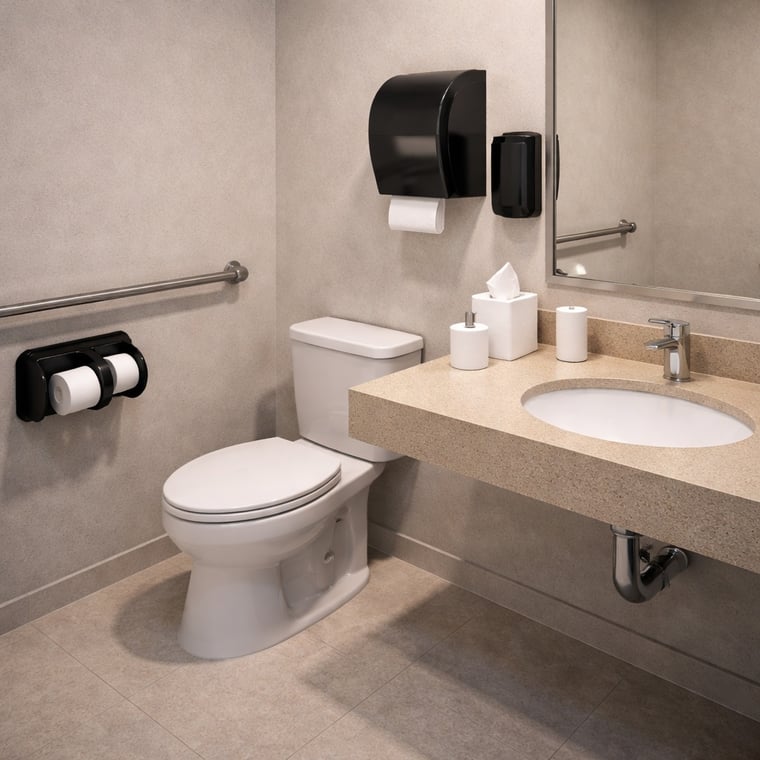
If there’s one area that will make or break how patients perceive your practice, it’s the restroom. People notice immediately when something’s off — an empty dispenser, a floor that wasn’t really mopped, a bin that overflowed and got emptied but never wiped down.
Every night, without exception:
- Fixtures cleaned properly
- High-touch points covered: dispensers, handles, stall hardware
- Floors done with attention to corners and behind toilets
- Trash emptied, relined, and surrounding area wiped
- Supplies restocked to a defined minimum threshold
Not “topped off when someone remembers” — a set standard that gets checked consistently. If your restrooms see heavy midday traffic, build daytime check-ins into the scope separately. Relying on a nightly cleaning reset alone isn’t realistic for a busy practice. Strong Nightly Cleaning for Medical Offices protocols ensure restrooms are consistently maintained to the highest standard.
Breakroom and staff areas
Small rooms, outsized complaints. Staff breakrooms get overlooked more than almost any other area — and your team notices.
Nightly scope should cover:
- Counters and sinks wiped down
- Appliance exteriors cleaned, especially handles and microwave buttons
- Trash removed and relined
- Floors cleaned based on actual soil level
If you want the inside of the microwave cleaned or the fridge cleared out on a schedule, put it in writing with a frequency attached. If it’s not in the scope, it won’t happen consistently — and by the time someone complains, three months have gone by.
Including these overlooked areas is another key element of comprehensive Nightly Cleaning for Medical Offices, helping maintain staff satisfaction as well as cleanliness.
Hallways, doors, and shared touchpoints
These get skipped more than they should. Not because anyone decides to skip them, but because they’re easy to walk past when moving through a building quickly.
Nightly scope here should include:
- Door hardware and common touchpoints wiped
- Interior glass spot-cleaned where needed
- Baseboards and corners checked for visible buildup
- Floor edges addressed in high-traffic lanes
These are the details that separate a building that looks maintained from one that just looks cleaned. The difference is noticeable, even if patients can’t always put their finger on what they’re seeing. Attention to these details is what elevates Nightly Cleaning for Medical Offices from basic cleaning to a true professional standard.
What happens during the day
Nightly cleaning is the reset. It’s not a solution for everything that happens between 8 a.m. and 6 p.m.
A lot of medical offices handle a few things informally during the day — a restroom supply check mid-morning, a spill near the entrance dealt with quickly, a once-over in the waiting room before an afternoon rush. That works until it doesn’t.
If you’re not using dedicated daytime coverage, your scope should still name who owns these tasks and what “handled” means. Otherwise they fall to whoever happens to notice, and that’s not a system. Nightly Cleaning for Medical Offices works best when paired with clearly defined daytime responsibilities.
When to schedule a deep clean
Routine nightly cleaning maintains a baseline. Deep cleaning rebuilds one. It’s worth scheduling when:
- You’re starting a new program and need a real starting point
- Buildup is visible in corners, edges, and detail areas
- The office feels worn-down even right after a nightly clean
- Something specific is coming up — an inspection, a review, a leadership change
After a proper deep clean, nightly work holds up better. There’s less drift, less catching up, and the results last longer. A strong Nightly Cleaning for Medical Offices plan becomes even more effective when supported by periodic deep cleaning services.
Getting the scope right
A detailed scope of work isn’t bureaucracy — it’s what prevents months of frustration followed by a difficult conversation. At a minimum, make sure yours covers:
- Which areas are included and which aren’t, especially exam rooms
- The touchpoint checklist and how often each item gets addressed
- Restocking thresholds and who’s responsible for supplies
- How problems get documented, reported, and corrected
- Access procedures, alarm protocols, and after-hours contacts
The more specific the scope, the less room there is for “I thought that was included” on either side. Well-defined processes are the foundation of reliable Nightly Cleaning for Medical Offices.
Nightly cleaning in a medical office comes down to one thing: a reset your team and your patients can count on every morning. Get the scope right, keep the checklist honest, and the mornings take care of themselves.
Nightly Cleaning for Medical Offices ensures your facility consistently meets patient expectations, supports staff efficiency, and maintains a professional standard of care.
If you want a plan built around your specific office layout and patient volume, request a walkthrough. We’ll help you figure out what nightly cleaning should cover, whether daytime support makes sense, and when to bring in a deep clean before things start to slip.
.png)