
Floor Care Challenges Raleigh and Durham Facility and Property Managers Face During the Winter Months
Winter Floor Care Strategies for Raleigh and Durham Office Buildings
Winter does not have to mean snowstorms to cause floor damage. In Raleigh and Durham, winter brings rain, moisture, fine grit, and temperature changes that quietly wear down floors every day.
For office managers and property managers in the Triangle, winter floor care issues tend to show up gradually. Finishes lose their shine. Carpet paths darken. Slip complaints increase near entrances. By the time these problems feel urgent, damage has often already set in.
A focused winter floor care plan helps Raleigh and Durham offices protect their flooring investment while maintaining a clean, professional appearance throughout the season—especially across properties throughout the Carolinas.
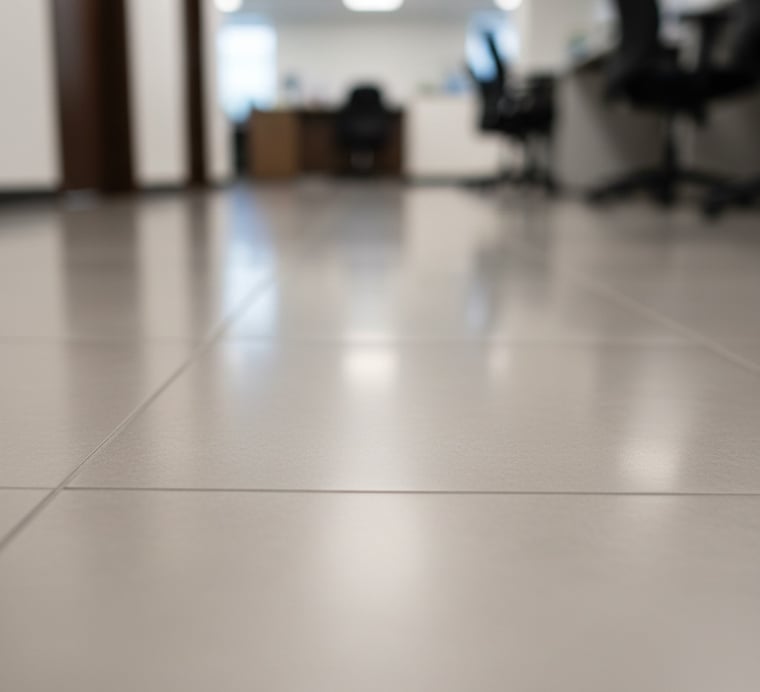
How Winter Conditions Impact Office Floors
Winter changes how soil and moisture move through a building. What enters through the front door does not stay there.
Moisture from rain spreads beyond entry mats and settles into corridors, elevator lobbies, and break areas. Fine grit scratches floor finishes and embeds into carpet fibers. Heating systems running constantly increase static and dust, which settles on floors and dulls their appearance.
In multi-tenant office buildings, these conditions are amplified by higher daytime traffic and less tolerance for visible wear, making winter floor care an operational priority rather than a seasonal afterthought.
Entryways and Walk Paths Take the First Hit
Entryways are the front line of winter floor damage, especially in Raleigh and Durham offices where rainy days are common.
Moisture and debris quickly move from vestibules into lobbies and main corridors. Without proper attention, this leads to slippery surfaces, worn finishes, and uneven-looking floors that reflect poorly on building management.
Strong winter floor care at entries focuses on proactive maintenance rather than constant cleanup. When walk paths are addressed early, the rest of the building stays cleaner longer.
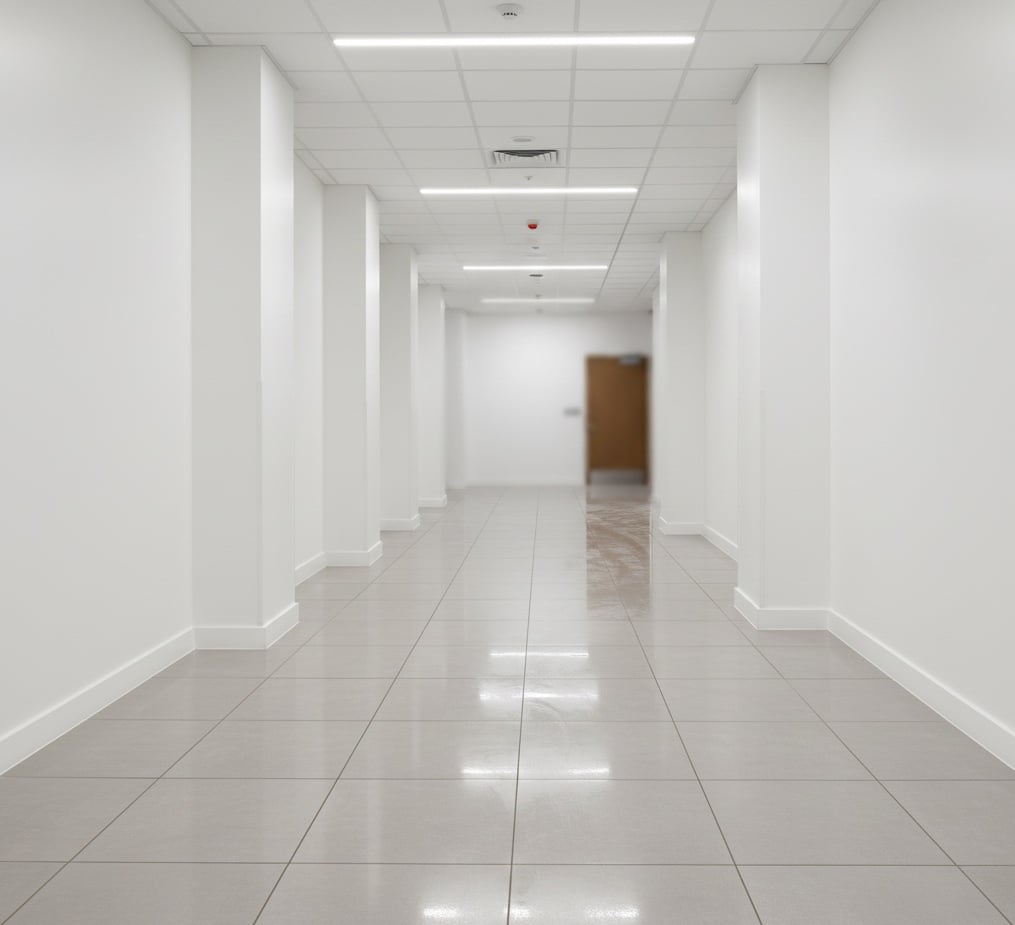
Matching Floor Care Methods to Your Flooring Types
Not all floors respond to winter conditions the same way. A one-size-fits-all approach often creates more problems than it solves.
Hard Floors: VCT, LVT, and Tile
Hard floors are especially vulnerable to fine grit and moisture during winter months. Salt residue and tracked debris slowly break down floor finishes if not removed correctly.
Effective winter floor care for hard surfaces includes:
-
Using pH-neutral cleaners to remove residue without damaging finishes
-
Increasing machine scrubbing frequency in high-traffic areas
-
Addressing dull or worn zones before the finish fails completely
Maintaining finishes through winter reduces the need for costly strip-and-wax services later in the year.
Carpeted Areas and Walk-Off Zones
Carpet acts like a filter, trapping moisture and fine soil deep in the fibers. In winter, this buildup happens faster than most teams expect.
For Raleigh and Durham offices, winter carpet care often requires:
-
More frequent HEPA vacuuming along walk paths
-
Interim encapsulation cleaning to control surface soil
-
Extraction when moisture and staining become visible
Staying ahead of carpet soil improves appearance and helps control odors during the season.
Why Winter Floor Care Complaints Escalate Quickly
Floor-related complaints tend to escalate faster in winter because they combine safety and appearance concerns.
Wet floors near entrances raise slip risk. Dull or streaked finishes make spaces look neglected. Dark carpet paths give the impression that cleaning is not keeping up, even when nightly service is consistent.
In office environments, these issues are often noticed by tenants and visitors before management has time to react. A preventative winter floor care plan reduces the chance that floors become the reason complaints start.
Adjusting Cleaning Frequency for Winter Traffic
One of the most common winter mistakes is keeping the same floor care schedule year-round.
Winter traffic patterns change. Entryways stay wet longer. Lobbies see more foot traffic as people remain indoors. Breakrooms and shared spaces experience heavier use.
Adjusting scrub schedules, carpet maintenance frequency, and mat rotation during winter helps floors recover faster and keeps appearance consistent across the building.
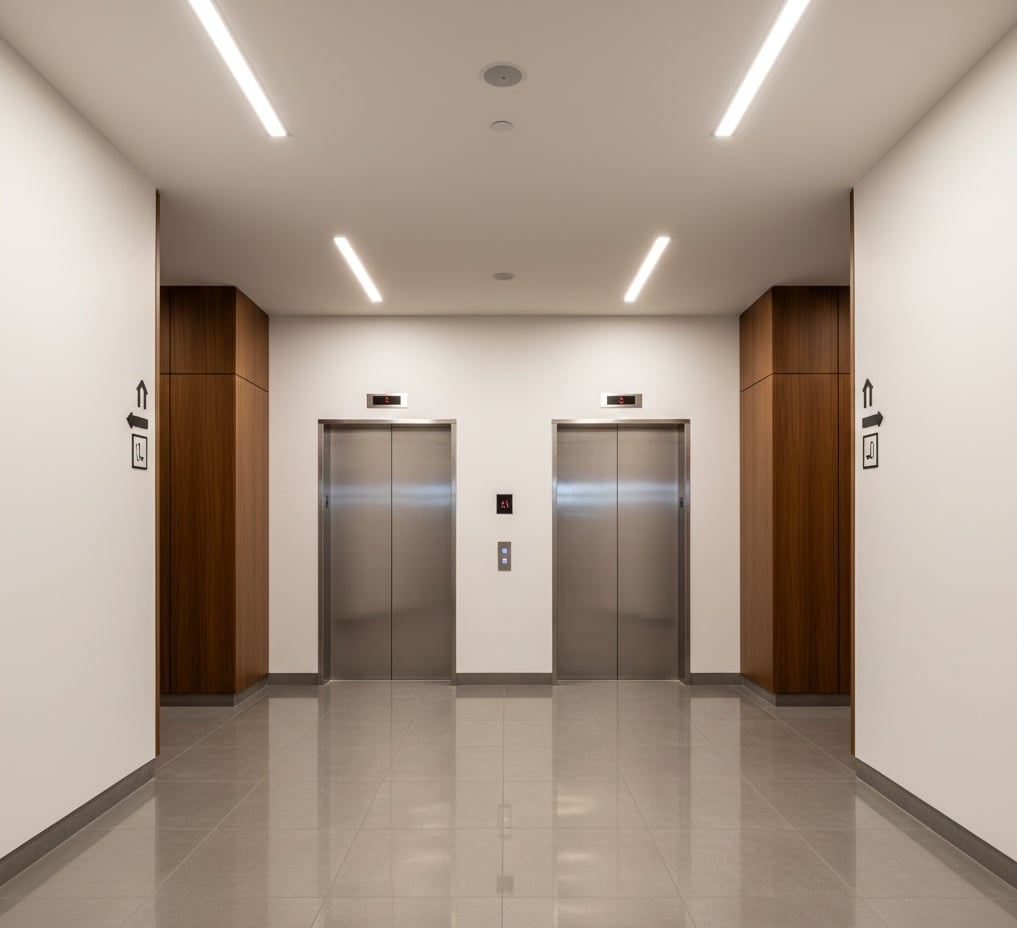
How a Winter Walkthrough Helps Prevent Floor Damage
A winter walkthrough provides clarity on where floor care efforts should be focused.
In Raleigh and Durham offices, a productive walkthrough looks at:
-
Entry mat placement and condition
-
Wear patterns along primary walk paths
-
Transition points between hard floors and carpet
-
Areas where moisture lingers throughout the day
This approach allows winter floor care plans to be adjusted based on real use, not assumptions.
Protecting Floors Through the Remainder of Winter
Winter floor care is about protection, not perfection. Floors that are managed proactively stay safer, cleaner, and easier to maintain as the season continues.
When moisture, grit, and wear are addressed consistently, finishes last longer and carpets retain their appearance. This reduces long-term repair costs and supports a more professional environment for tenants and staff.
Setting a Winter Floor Care Plan for Raleigh and Durham Offices
A smart winter floor care strategy helps Raleigh and Durham offices reduce complaints, protect flooring investments, and maintain strong first impressions through the toughest months of the year.
If you want a winter floor care plan tailored to your Raleigh or Durham property—or other facilities across the Carolinas—schedule a facility walkthrough with Elite Touch Cleaning Services. A customized approach keeps your floors protected and your building running smoothly all winter.